What does it take to bike 1,350 miles across Europe?
For Stowe Adaptive Supervisor Emma “Skizzi” Huffman, it meant battling fierce storms, physical exhaustion, and moments of real uncertainty while riding through seven countries to raise awareness and support for Vermont adaptive athletes.
I remember landing in Bucharest with an oversized, over-taped cardboard box in my hands, everything I would need for the next few months packed inside. Rain poured down as the box slid out of my grip, and I had to keep moving, weaving through traffic that seemed to obey no laws at all. By the time I climbed the hostel steps, the damp bundle had begun to unravel. The woman in the last cot (a Romanian woman with a deep skepticism of the world) looked at me and said, “You won’t survive a night in the wild here. Authority will take you down.”
A dream is a crime against reality. And I had an overwhelming, burning desire to commit that crime: to cross Europe on two tires with a tent, raising money and awareness for Vermont’s adaptive athletes and helping give them the opportunity to participate in the Winter Special Olympics.
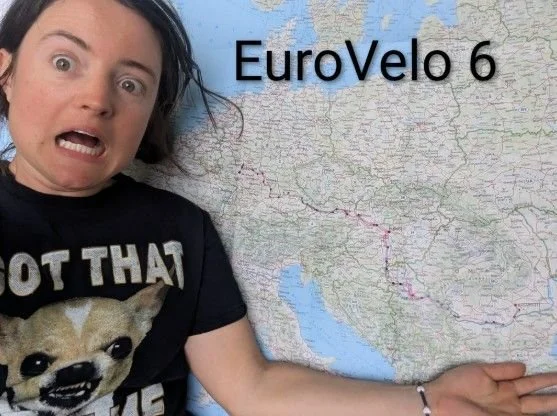
And just like that I found myself weighed down by fifty pounds of gear, climbing a long, slow thousand-foot ascent while headwinds rushed at sixty-five miles per hour. For the thirty-first time that day, I wanted to quit. My body, mind, and soul were exhausted, completely at their limit. I started thinking about the nineteenth- and twentieth-century settlers of the Great Plains and the “prairie madness” that came from relentless wind, isolation, and psychological strain. There is something about being exposed to the elements for too long that strips away your sense of control and I was starting to feel it.
We live in a world of constant change and struggle, one that demands flexibility and openness. As the supervisor of Stowe’s Adaptive Program and a former intern at Breckenridge Outdoor Education Center, I have witnessed the brilliance of adaptive athletes firsthand. Every athlete’s experience is different, but there is one thing they share: drive. That same willingness to challenge what reality says is possible.
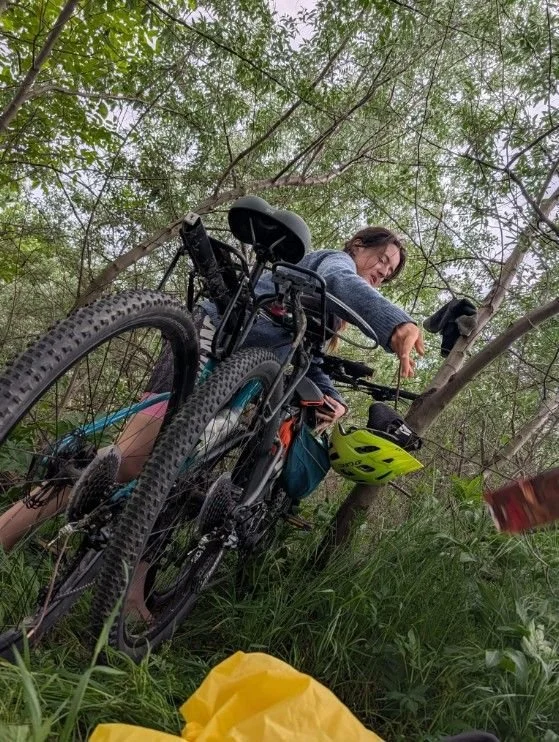
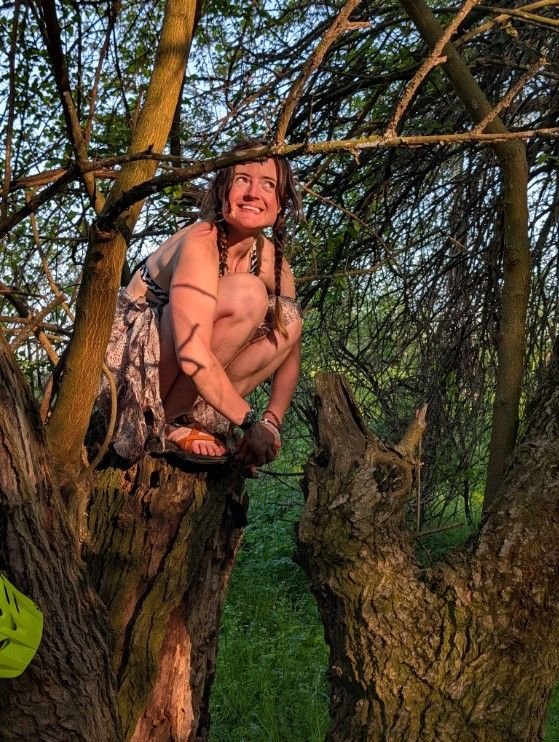
That first night in Romania, I lay awake on unfamiliar ground, surrounded by fear and newness. I had not anticipated the wild dogs. Romania has one of the highest stray-dog populations in Europe, and throughout the night I listened to shrill screams and low growls in the darkness. My travel partner and I made a plan in case we were attacked: which trees we could climb, where we could seek refuge until dawn. Pepper spray was clenched in my right hand and a knife in my left. “Go to sleep,” I whispered to myself.
Stowe is difficult to navigate even for someone who is able-bodied. Finding parking, schlepping gear, taking the shuttle, riding the Over Easy lift, and hiking up stairs in stiff ski boots is its own expedition. Now imagine doing all of that while navigating a physical, cognitive, or sensory disability. Crowds, weather, terrain, and logistics can become enormous barriers before an athlete even reaches the snow.
Climate change made a grand entrance during our trip. Every day, we were confronted with what local meteorologists described as life, and landscape, damaging rain, hail, wind, flooding, and extreme temperatures. Europe was experiencing one of its hottest summers on record, with thousands of heat-related casualties reported in major cities.
Then came the storm. The wind made our tent rise and fall like a heaving chest gasping for its final breaths. We stayed at our first, and only, designated campground that night. Rain seemed to break the laws of physics, coming from the north, east, west, and even south. We were too exhausted and cold to get out of our sleeping bags. Before sunrise, I began moving my belongings into the campground bathroom as the shivering intensified. I curled up in the sink, soaked clothes dripping and pooling water on the floor around me. When the sun finally came up, we started riding again. There was a grocery store ten kilometers away. Soggy and depleted, we pushed forward. I began walking my bike up hills. I went through the motions, but I felt worse and worse.
At the grocery store, I stood in a daze with protein shakes, salami, and cheese in my arms, waiting to pay. My vision became woozy. My blood sugar was crashing, and the woman in front of me was having trouble with her card. I needed everything to move faster. Nauseated and desperate, I stood there and drank an entire gallon of chocolate milk while waiting in line. I could pay after.
We were only a few miles from Belgrade, our first major city and a huge milestone, but I felt completely disconnected from reality. My travel partner was far ahead of me as I climbed what turned out to be the final ascent into the city. My movements got slower and slower. My pulse felt faint. I realized I was no longer in control. I tried to cry, but no tears came. I attempted to push my bike once more, then gave out. It crashed to the ground in the middle of the road. I could not lift it. Three cars rounded the bend and drove around me without stopping. Was this how I was going to end? On a curving, drenched road with no one in sight?
“Please don’t let me die,” I said.
Then a van rounded the corner. Inside were two men and a woman. They spoke quickly in Serbian before realizing I could not understand them. “Did you get hit?”
“No,” I said. “I can’t go on. I need help.”
I tried to show them the address of the hotel where we planned to dry our gear and recover for a few days, but my phone was wet and lagging.
“Get in,” they said.
The two men struggled to lift my bike and gear into the van. My friend came back down the hill.
“Skizzi, are you okay? What is going on?”
“We will get her to the hotel,” one of the strangers said.
I shook uncontrollably as I drank electrolytes and ate EuroCream with my finger (a Serbian hazelnut-and-cream spread.) The woman in the van told me it used to taste better when she ate it as a child, before the recipe changed.
At the hotel, I was disoriented. I tried to thank them and check in, but I could not stop shaking long enough to find my wallet. The man at the front desk let me into the room anyway. “Take care of yourself first,” he said. When my friend arrived, I had stripped off all my wet clothes and wrapped myself in hotel blankets. My teeth were chattering violently.
“Let’s get you in a bath,” he said.
“No. I’m too cold.”
Hours later, I was warm again. Safe. Comfortable. That was when I realized I had not listened to my body. I had pushed far past my physical limits, and my body had revolted.
“An uncontrolled confrontation with death” becomes trauma.
No two athletes experience the mountain in the same way, but there is something I have always admired about adaptive athletes: they see the world as it is. There is no sugar-coating, no hyperbole, no pretending. It is exactly what is seen, felt, and experienced. Life in its most authentic form.
I do not follow organized religion. But after the incident, even though I was sleeping and eating again, I did not feel the same. I had not stepped on my bike for several days. While exploring Belgrade, I walked into a massive church and looked up at a dome painted with Jesus Christ. Without even realizing what I was doing, I started praying into those wide, sorrowful eyes. The words came easily, filling the curved walls around me. It’s okay to need help.
Regardless of background or ability, the mountain has room for every athlete to experience winter. For some, simply seeing the snow with their own eyes is enough. For others, skiing or riding is about balance, control, autonomy, joy, or connection. Progress looks vastly different for every person. Tom Hall, the heart and soul of Stowe’s adaptive program, put it best: “Maintenance can be a form of progress.” For athletes with degenerative disabilities, that truth can be overlooked. It deserves acknowledgment, respect, and appreciation.
We took the train to Budapest. In every city, I would marvel, “Wow, look how pretty New York is!” As creatures of the forest, we were never quite sure what to do in urban places. I delayed getting back on my bike for as long as I could. When it was time to head into northern Hungary, I broke down crying. The same cold, dizzy feeling returned. I could barely eat.
“Let’s stay in the city one more night,” I said.
An athlete never gives up.
That is where I thought the story would end. I thought we would pack up the bikes and go home. I no longer felt like I possessed the energy or strength to continue. But if I gave up, the fear would remain. The uncertainty would remain.
So we kept riding.
We took frequent breaks. We refueled. We checked in with ourselves. We kept moving. The distance no longer mattered. It became about helping my body settle again and teaching my mind that I was safe.
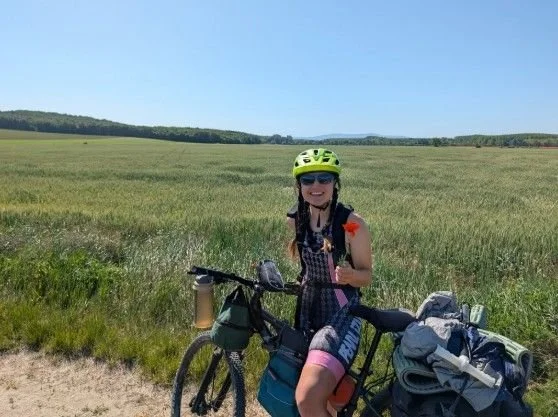
It had always been about adapting to the environment.
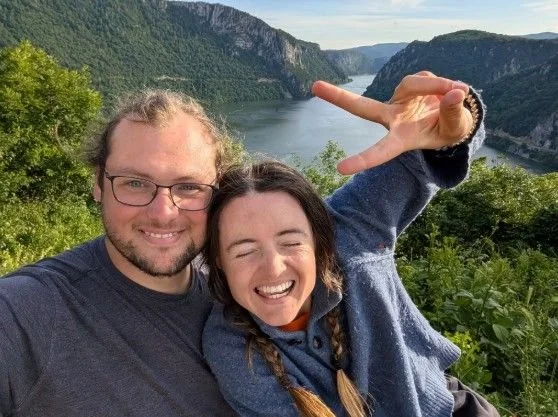
Eventually, joy and belief returned. We pedaled through Romania, Bulgaria, Serbia, Hungary, Slovakia, Austria, and into Germany. Nothing became easier. It simply became different. We navigated the world one kilometer at a time, improvising and learning as we went.
There is no grand purpose in the order of things. There is no special meaning assigned to the lives we create. I was not spiritually awakened or propelled into the next chapter of adulthood by this journey. There was no clean epiphany.
There was only the ride: the fear, the weather, the strangers who helped, the body that failed, the body that recovered, and the choice to keep moving. That is adaptability in its purest form.
As much as I despise corporate catchphrases and slogans, I have to admit: this truly was an “experience of a lifetime”.